How Long Does Hydrogen Tracer Gas Take to Reach the Surface?
Underground Water Leak Detection Using Hydrogen Tracer Gas
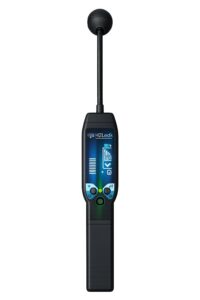
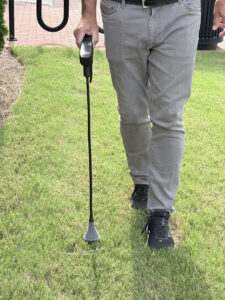
Hydrogen tracer gas is the fastest and most effective tracer gas for locating underground water leaks. Once a water line is pressurized with a safe 5% Hydrogen / 95% Nitrogen gas mixture, the hydrogen escapes through the leak and rapidly migrates upward through the surrounding soil until it reaches the surface where it can be detected in concentrations as low as a few parts per million (ppm).
Because hydrogen molecules are the smallest and lightest of all gases, they move through soil much faster than helium, allowing technicians to pinpoint leaks quickly with exceptional accuracy.
Why Hydrogen Reaches the Surface So Quickly Over Helium
| Property | Hydrogen | Helium |
|---|---|---|
| Molecular Weight | 2 | 4 |
| Relative Diffusion Rate | 100% | 25–30% |
| Natural Background | None | Present in atmosphere |
| Typical Detection Sensitivity | Excellent | Excellent |
| Cost | Lower | Higher |
| Leak Detection Speed | ★★★★★ | ★★★★☆ |
Hydrogen migrates approximately four times faster than helium, making it the preferred tracer gas for underground leak detection in water distribution systems, plumbing, fire protection systems, and irrigation lines.
Estimated Travel Time by Material and Depth
| Covering Material | Depth / Thickness | Estimated Wait Time |
|---|---|---|
| Dry Sand | 1 meter (~3.3 ft) | 20 minutes |
| Loose/Dry Soil | 2 feet | A few minutes to 30 minutes |
| Wet Sand / Dry Soil | 1 meter (~3.3 ft) | 1 hour |
| Dry Clay / Wet Soil | 1 meter (~3.3 ft) | 4 hours |
| Wet Clay | 1 meter (~3.3 ft) | 12 hours |
| Asphalt | 5 cm (~2 in) | Up to several hours |
| Concrete | 20 cm (~8 in) | Several hours |
| Deep Pipe (All types) | 8 feet | Overnight (suggested) |
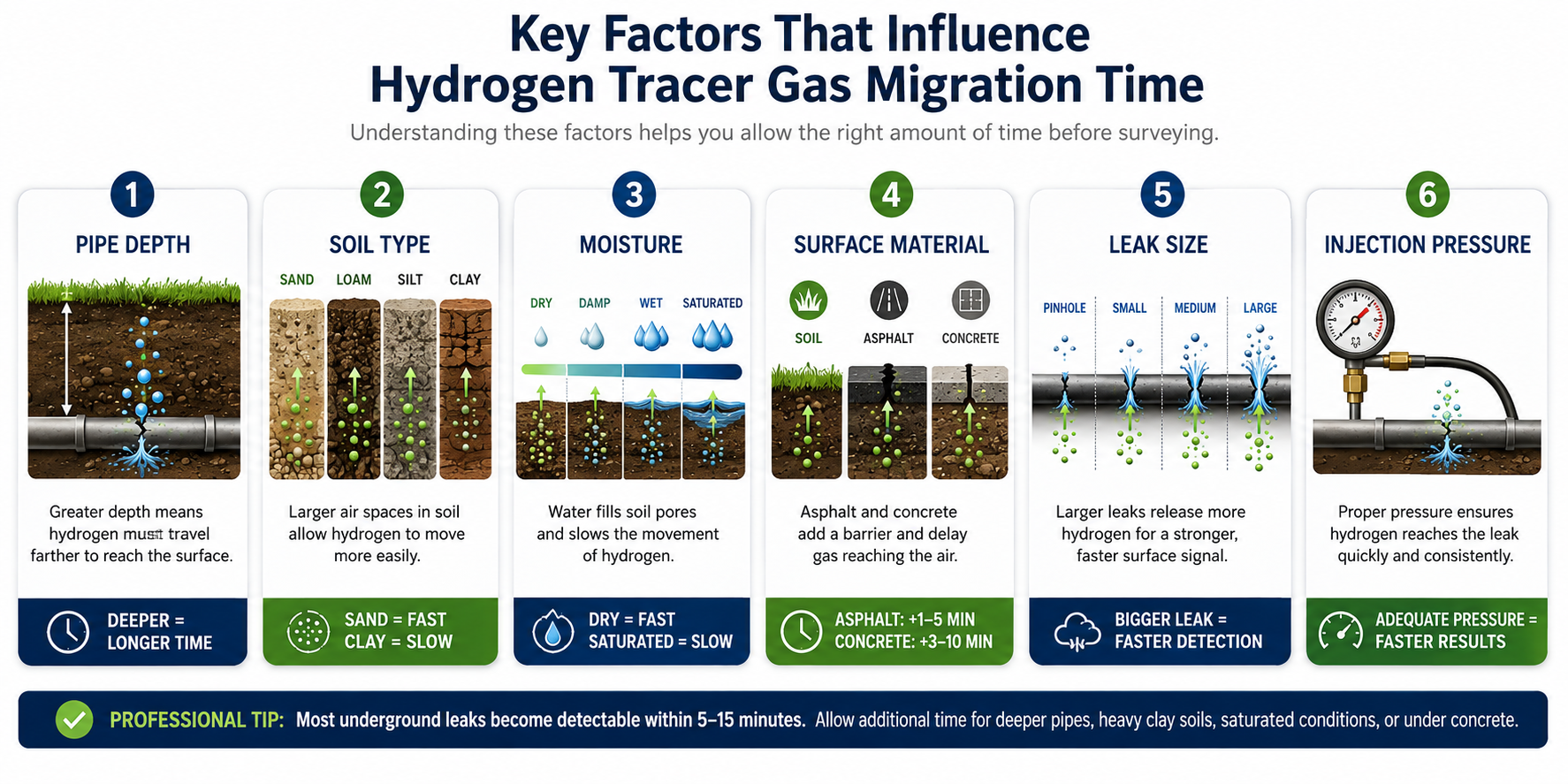
Key Factors Influencing Hydrogen Tracer Gas Migration Time
The time required for hydrogen tracer gas to migrate from an underground pipe leak to the surface depends on several environmental and installation factors. Understanding these variables helps technicians determine the optimal waiting period before beginning a surface survey.
| Factor | Effect on Migration Time | Typical Impact |
|---|---|---|
| Pipe Depth | Greater depth increases travel distance. | High |
| Soil Type | Sandy soils allow rapid gas movement; clay soils slow diffusion. | High |
| Soil Moisture | Water fills soil pore spaces, reducing gas flow. | Very High |
| Surface Material | Asphalt and concrete delay gas reaching the atmosphere. | Moderate |
| Leak Size | Larger leaks release more tracer gas, creating a stronger surface signal. | Moderate |
| Injection Pressure | Higher pressure increases tracer gas flow through the leak. | Moderate |
| Soil Compaction | Dense or compacted soils restrict gas movement. | Moderate |
| Temperature | Warmer soils generally promote slightly faster diffusion than colder soils. | Low |
| Wind Conditions | Strong winds can disperse hydrogen once it reaches the surface. | Low |
| Detector Sensitivity | More sensitive instruments detect smaller hydrogen concentrations sooner. | High |