Hydrogen Tracer Gas Leak Detection for Municipal Water Utilities
Reduce Water Loss. Locate Hidden Leaks. Protect Infrastructure
The Municipal Water Loss Challenge-Aging Infrastructure Creates Hidden Costs
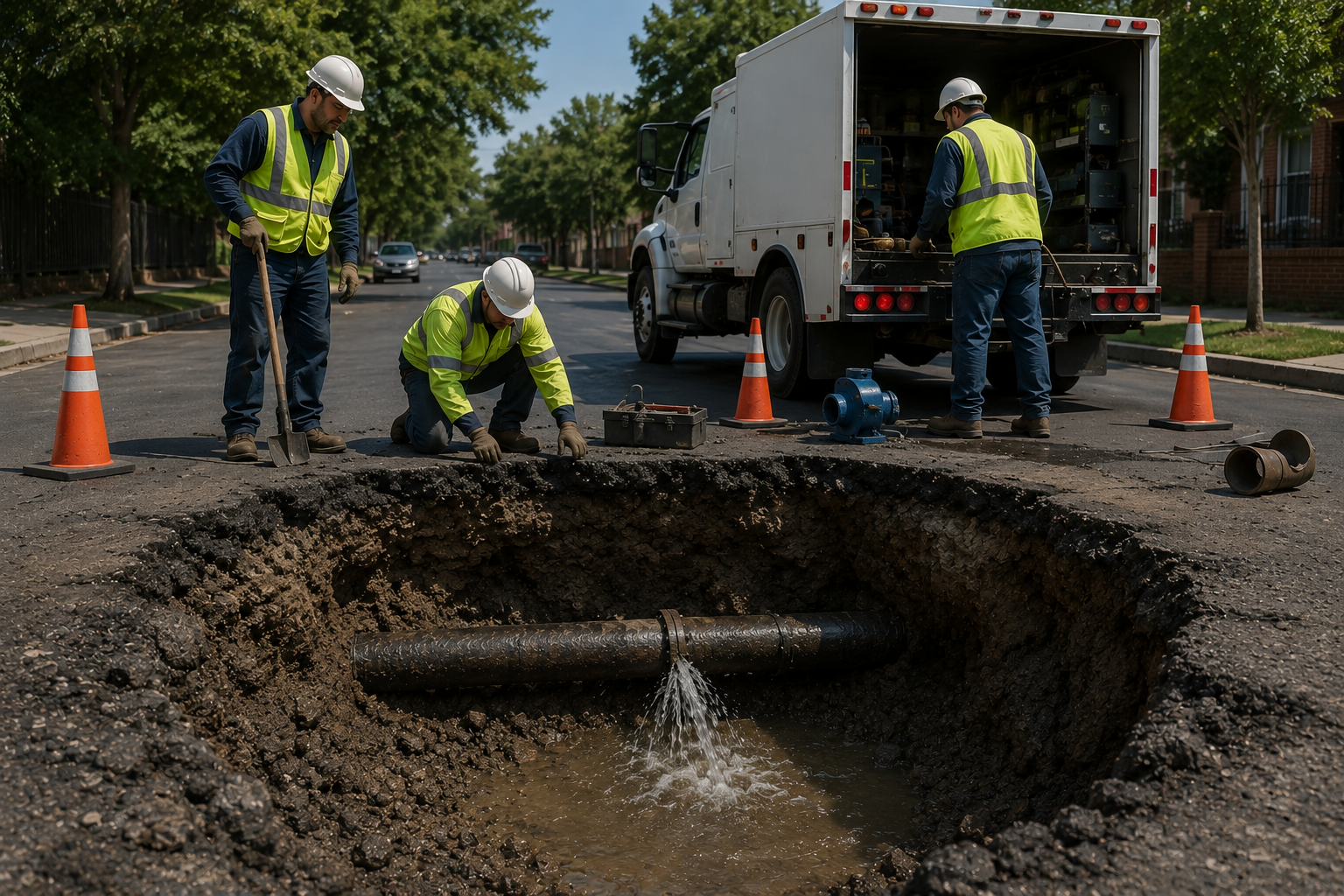
Reduce Water Loss. Locate Hidden Leaks. Protect Infrastructure.
Municipal water systems lose millions of gallons of treated water every year due to aging infrastructure, underground leaks, deteriorating service lines, and difficult-to-locate pipe failures.
Traditional leak detection methods such as acoustic listening, correlators, and pressure testing can be effective—but they have limitations, especially with plastic pipe, deep underground leaks, noisy environments, and low-flow leaks.
Hydrogen tracer gas leak detection provides water utilities with a highly sensitive, non-destructive method to locate underground water leaks quickly and accurately.
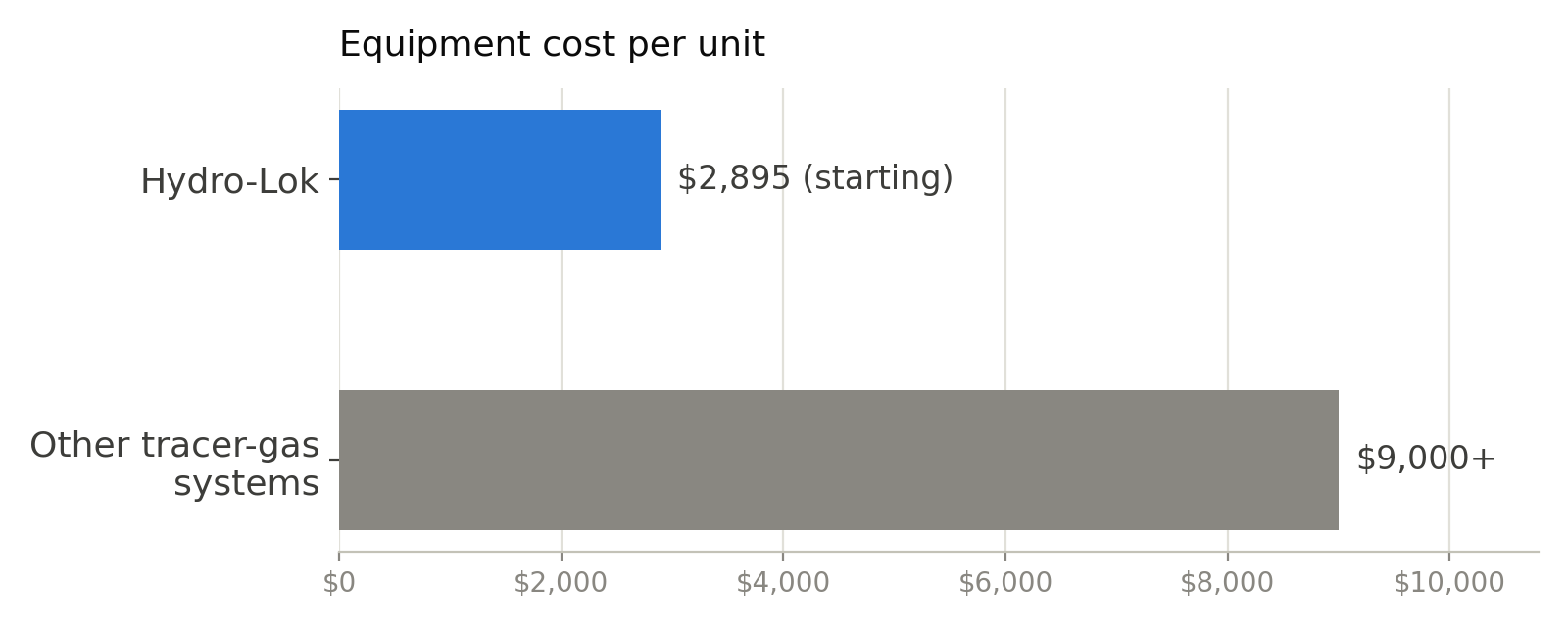
Cost Comparison of the H2 Leak Hydro-Lok vs Competition
The Problem: Water You Can't See, Losses You Can't Ignore
Underground distribution mains, service lines, and valves leak quietly for months or years before symptoms appear at the surface. Acoustic leak detection — the industry standard — works well on metallic pipe under favorable soil conditions, but it routinely struggles on:
- Plastic and PVC pipe, which transmits sound poorly
- Low-pressure or low-flow leaks that don't generate a strong acoustic signature
- Noisy urban environments with traffic, utility congestion, and background vibration
- Deep-set or large-diameter mains where sound attenuates before reaching the surface
When acoustic tools return an inconclusive result, utilities are often left choosing between
1) Expensive area excavation
2) Prolonged period of water loss
3) Hiring Expensive Contractors to Locate the Leak Location
Savings Calculator
How Tracer Gas Leak Detection Reduces Trench Excavation
The Hydro-Lok Solution: Tracer Gas Where Sound Can't Go
Hydro-Lok uses hydrogen tracer gas detection — a method built on simple physics rather than acoustics, so it succeeds precisely where sound-based tools fail.
How it works:
- Introduce tracer gas. A safe, non-flammable mixture of 5% hydrogen / 95% nitrogen is injected into the isolated pipe section under low pressure.
- Gas finds the leak. Because hydrogen molecules are so small, they escape rapidly through even hairline cracks, pinhole corrosion, or failed joints — long before water flow would reveal the same defect.
- Gas rises to the surface. Hydrogen is lighter than air and migrates straight upward through soil, gravel, asphalt, and even concrete.
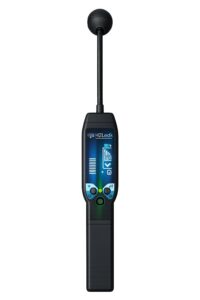
- Crews pinpoint the leak. A technician walks the pipe route with the Hydro-Lok sensor, which detects hydrogen at single-digit ppm concentrations, marking the exact leak location — usually within a 3 foot circle — before a single shovel goes into the ground.
Why This Matters Technically
| Capability | Acoustic Detection | Hydro-Lok Tracer Gas |
|---|---|---|
| Works on plastic/PVC pipe | Limited | Yes |
| Works on low-flow/pinhole leaks | Limited | Yes |
| Effective through pavement/concrete | Yes | Yes |
| Performs in high-noise urban corridors | Reduced accuracy | Unaffected |
| Locating precision | General area | Pinpoint (within feet) |
| Safe, non-flammable process | N/A | 5% H₂ / 95% N₂ — non-combustible |
Hydro-Lok isn't a replacement for acoustic tools — it's the verification and pinpointing layer utilities add when acoustic surveys are inconclusive, when pipe material or soil conditions work against sound-based methods, or when a second, independent confirmation is needed before authorizing excavation.
The Cost-Saving Case for Municipal Utilities
1. Fewer, Smaller, More Accurate Digs
Pinpoint accuracy means crews excavate a few feet of pipe instead of an entire block. Every reduction in dig footprint saves on asphalt/concrete restoration, traffic control, backfill, and labor hours — often the single largest cost driver in a leak repair.
2. Lower Non-Revenue Water (NRW)
Every leak located and repaired sooner directly reduces water lost before it reaches a paying customer — improving the real losses component of an AWWA M36 water audit and reducing the volume of treated water utilities must produce to meet system demand.
3. Reduced Reliance on Specialty Contractors
Where other tracer-gas leak detection systems commonly run well above $9,000, Hydro-Lok delivers comparable sensitivity and locating precision at a fraction of the cost — inexpensive enough to equip multiple crews or trucks in-house rather than contracting out every inconclusive acoustic survey.
4. Fewer Emergency Repairs
Small leaks found early are planned repairs. Small leaks left undetected become main breaks — with emergency crew costs, service disruption, property damage claims, and public trust impacts. Early detection shifts spending from emergency response to planned maintenance.
5. Extended Asset Life
Chronic, undetected leaking accelerates pipe bedding erosion and corrosion at the leak site. Finding and repairing leaks earlier protects surrounding infrastructure and extends the service life of mains and laterals.
6. Faster Crew Deployment, Less Downtime
The system is portable, requires no specialized certification beyond standard training, and can be deployed by existing distribution crews — no waiting on outside vendors or scheduling delays.
Where Utilities Use Hydro-Lok
- Confirming and pinpointing leaks after an inconclusive acoustic survey
- Locating leaks in PVC and plastic water mains and service lines
- Investigating unexplained pressure loss or unaccounted-for water in a district metered area (DMA)
- Verifying suspected leak locations before scheduling excavation crews
- Post-repair confirmation that a leak has been fully resolved