Sound stops.
Hydrogen doesn't.
Why Choose Hydrogen over acoustic
Sound stops.
Hydrogen doesn't.
Acoustic listening devices need sound to travel through pipe and soil to a microphone. Plastic mains, deep services, and city noise routinely defeat them. Hydrogen tracer gas doesn't listen for a leak — it goes to the surface directly above it, every time.
Acoustic detection was built for a metal-pipe world.
Most new and rehabilitated water mains and services now go in as PVC, HDPE, or other non-metallic materials. Sound behaves very differently underground than gas does — and it's costing crews time on every job that doesn't fit the old assumptions.
Non-metallic pipe deadens the signal
Plastic and composite pipe transmit far less leak noise than cast iron or steel. On PVC and HDPE mains, acoustic correlators often can't pick up a usable signal at all.
Depth and distance attenuate sound fast
Leak noise falls off sharply with depth and pipe diameter. Deep transmission mains and large-diameter feeders can put a leak's true sound well below the detection floor.
Ambient noise crowds out the leak
Traffic, HVAC, nearby industry, even wind — acoustic crews often have to work pre-dawn or close streets to get a quiet enough window to trust a read.
Interpretation is subjective
Sound signature reading is a trained ear's judgment call. Two technicians can mark two different points on the same leak, and confidence varies shift to shift.
False digs are expensive
A missed or misread acoustic call means an excavation on the wrong spot — paid crew hours, restoration cost, and a leak that's still running.
Slower coverage per crew
Correlating, re-listening, and confirming ambiguous acoustic reads takes time — time that limits how much line one crew can actually survey in a day.
Four steps, one confirmed leak location.
Hydrogen is the smallest, lightest molecule there is. Once it's in the pipe, it doesn't need sound to travel — it moves through soil, gravel, and pavement on its own, straight to the surface.
Isolate & inject
An isolated section of main is depressurized briefly and charged with a 5% hydrogen / 95% nitrogen tracer mix — non-flammable, safe, and compatible with potable water systems.
Gas escapes at the leak
Wherever the pipe is compromised, tracer gas escapes with the water. Being the smallest molecule, hydrogen separates from the water and moves ahead through the surrounding soil.
It rises to the surface
Hydrogen diffuses upward through soil, gravel, and even asphalt or concrete far faster than sound propagates through pipe wall and ground — reaching the surface directly above the leak.
The technician pinpoints it
A handheld hydrogen sensor is walked along the main. The reading peaks precisely above the leak, giving a mark accurate to within a couple of inches — no interpretation required.
Acoustic vs. hydrogen tracer gas.
Same job, same crew, two very different detection physics.
| Condition | Acoustic Detection | Hydrogen Tracer Gas |
|---|---|---|
| Plastic / non-metallic pipe | Poor — sound barely transmits | Unaffected — gas migrates through soil, not pipe |
| Deep or large-diameter mains | Signal attenuates sharply with depth | Reliable — diffusion path is short vertically |
| Noisy / high-traffic sites | Requires quiet windows to work | Unaffected by ambient noise |
| Pinpoint accuracy | Operator-dependent, often ±3–6 ft | Typically ±2 in, directly over the leak |
| False-dig risk | Higher — subjective signal reading | Low — gas confirms an exact point |
| Time to confirm one leak | 30–90+ min, more on difficult ground | Typically under 10 min once injected |
| Skill / training curve | Years to read signatures reliably | Reading a peak concentration is objective |
Fewer wrong digs. More billable leaks found.
- →
Excavation cost drops when every dig is confirmed on top of the actual leak, instead of a best-guess zone based on a sound signature.
- →
More line surveyed per labor hour because pinpointing takes minutes instead of repeated listening passes.
- →
Lower training overhead — new technicians can read a hydrogen peak reliably far sooner than they can learn to interpret acoustic signatures.
- →
Fewer callbacks since the tracer gas confirms the exact leak point the first time, not an approximate zone that sometimes misses.
- →
Equipment utilization scales with volume — the more leaks a crew locates per week, the lower the effective cost per leak found.
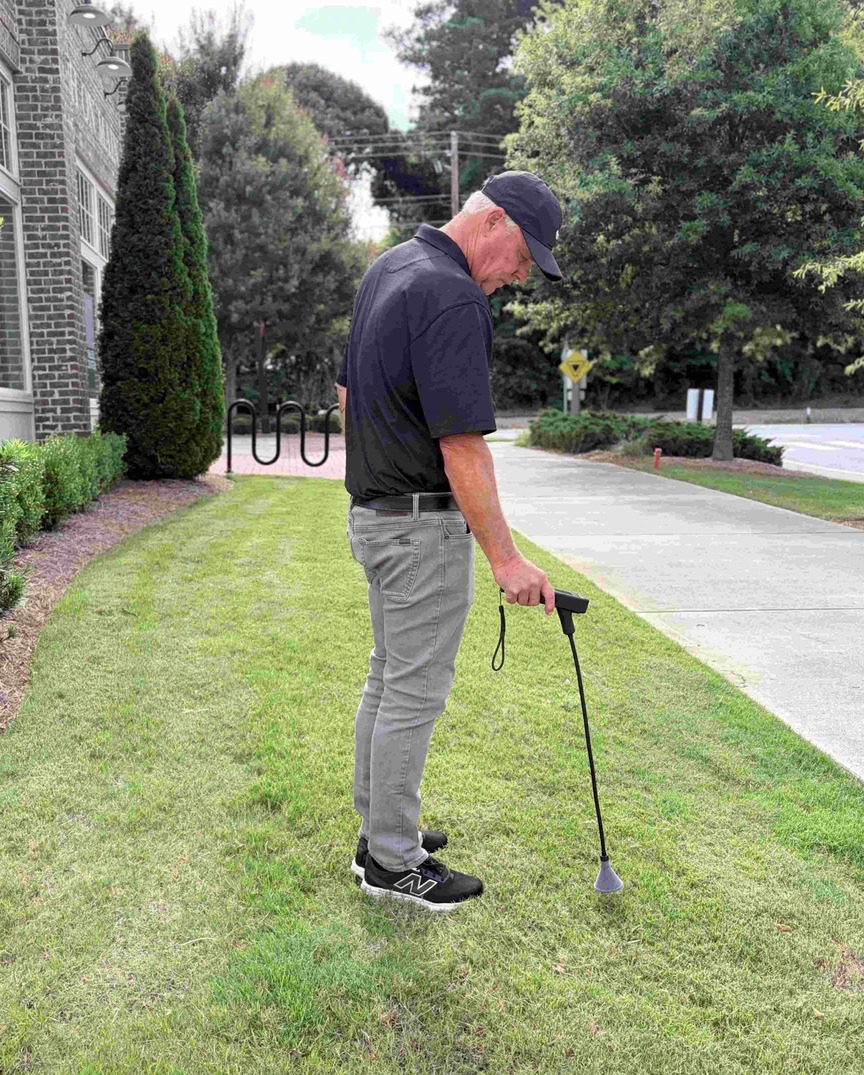
Our Underground Tracer gas H2 Leak Detectors
H2Leak-Underground Underground Pipe Leak Detector
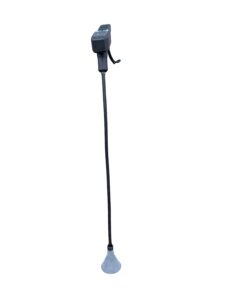
The Hydro-Lok Underground Leak Detector (Subsurface Leak Detector) uses the TLD.500 on a ground probe to located leaks in underground pipe. Applications are usually water line leaks but can also be gas lines and steam lines. System includes a H2 regulator and air hose.