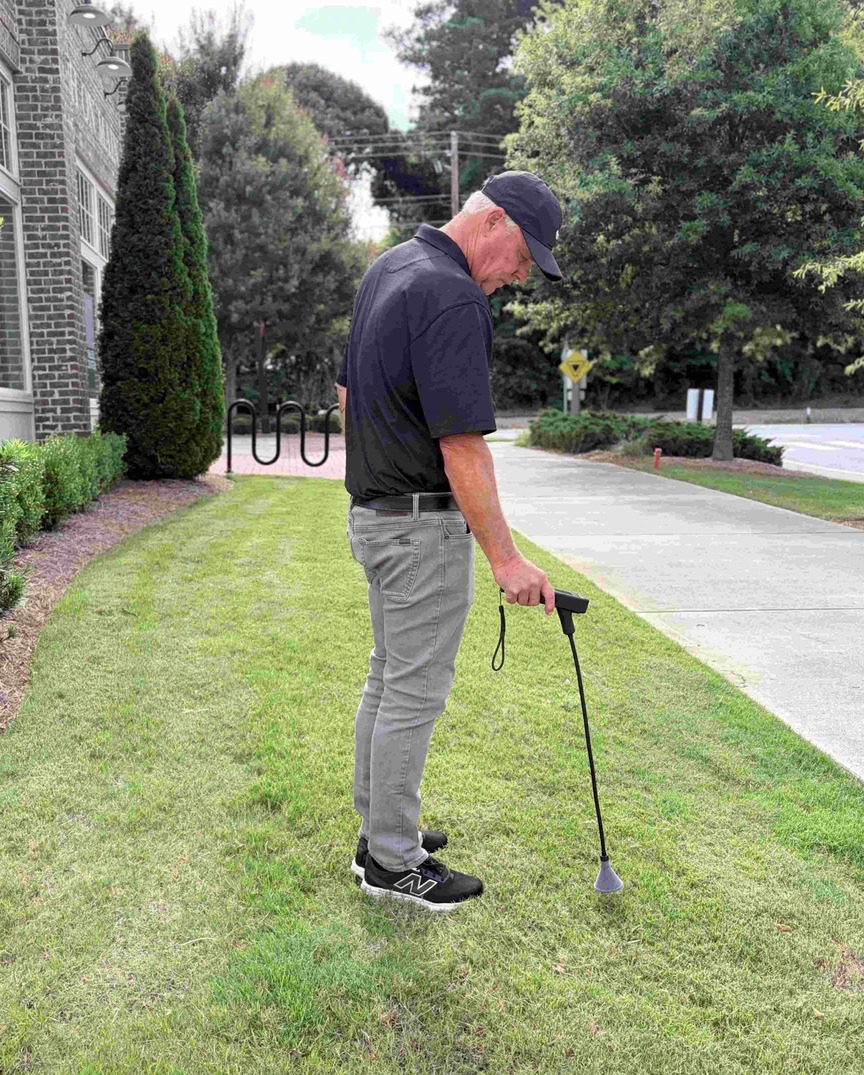
H2Leak.com is a leading supplier for advanced hydrogen leak detection solutions designed for precision testing across field service and manufacturing applications. Specializing in hydrogen tracer gas leak detection equipment, H2Leak provides high-sensitivity detectors, tracer gas solutions, and application expertise for HVAC and refrigeration systems, EV batteries, automotive air conditioning, underground utilities, and OEM production environments. With a focus on accuracy, safety, and repeatable results, H2Leak helps engineers and technicians quickly locate leaks, reduce downtime, and ensure long-term system reliability.
How Our Hydrogen Leak Detectors Work
Our hydrogen leak detectors use a hydrogen sensing chip that activates in the presence of hydrogen. The hydrogen sensing chip is so sensitive that it can detect trace amounts of hydrogen from and exhaled breath! Leaks are found by using a a 5% Hydrogen 95% Nitrogen tracer gas mixture, then placing sniffer tip of the Hydrogen Leak Detector along the suspected piping. When a leak is present the Hydrogen Tracer Gas will escape be detected at ground level. When a leak is detected the Hydrogen Leak Detector increases its beeping and amount of lights on the panel in relation to the amount of hydrogen detected. This process works even for buried or covered equipment as long as it is permeable to gas.
H2Leak-Hydro-Lok Underground Pipe Leak Detector
Subsurface & Underground Pipe Leak Applications- Highest Quality with Field Replaceable Sensor. Locate leak locations more accurately and faster than methods such as ultrasonic.
DXH-240 Hydrogen Leak Detector
High Sensitivity with Adjustable Sensitivity Thresholds for Service & Production Applications- Field Replaceable Sensor
TLD.500 Hydrogen Leak Detector
High Sensitivity Lowest Cost for Service Applications
VL30 Hydrogen & Refrigerant Leak Detector
Very Low Leak Rate Production Applications like Refrigerators
Underground Applications
H2Leak-Underground Underground Pipe Leak Detector
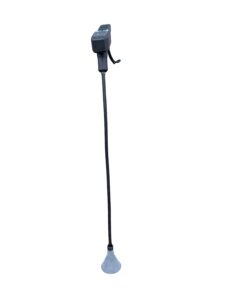
The Hydro-Lok Underground Leak Detector (Subsurface Leak Detector) uses the TLD.500 on a ground probe to located leaks in underground pipe. Applications are usually water line leaks but can also be gas lines and steam lines. System includes a H2 regulator and air hose.
Leak Detection in Underground Water Lines Using H2 Tracer Gas
Accurate, Non-Invasive Leak Detection for Buried Water Infrastructure
Hydrogen tracer gas leak detection is one of the most accurate and non-destructive methods for locating leaks in underground water lines. By introducing a safe hydrogen gas mixture into a pipeline and scanning above ground with a hydrogen leak detector, leaks can be pinpointed quickly—even in deep, non-metallic, or inaccessible pipes.
This method is widely used by municipal water utilities, leak detection professionals, and infrastructure maintenance teams to reduce water loss, excavation costs, and downtime.
How Hydrogen Tracer Gas Leak Detection Works
-
Drain or Isolate the Water Line
The water line is depressurized and partially drained, if required. -
Introduce Hydrogen Tracer Gas
A non-flammable tracer gas mixture—typically 95% nitrogen / 5% hydrogen—is injected into the pipe. -
Gas Escapes at Leak Points
Due to hydrogen’s extremely small molecular size, it escapes rapidly through even microscopic leaks. -
Surface Detection
The hydrogen rises through soil, asphalt, or concrete and is detected at the surface using the H2Leak Underground Hydrogen Leak Detector or Hydro-Lok Hydrogen Leak Detector -
Pinpoint Leak Location
The highest hydrogen concentration indicates the precise leak location, minimizing excavation.
Why Use Hydrogen for Underground Water Leak Detection?
Hydrogen is the ideal tracer gas for underground applications due to its unique properties such as much lower cost than helium and high energy to move easily through dirt, asphalt and concrete.
Key Advantages
-
Smallest molecule – finds leaks other methods miss
-
Rises quickly through soil – easy surface detection
-
Non-toxic and non-corrosive
-
Safe gas mixture (non-flammable at 5% hydrogen)
-
Works on all pipe materials – metal, PVC, HDPE, clay, concrete
Field Service & Small Production
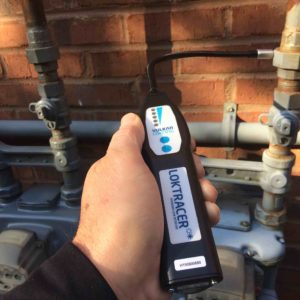
TLD.500 Hydrogen Leak Detector
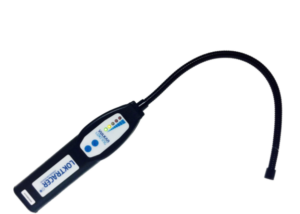
The TLD.500 is a great choice for service applications where a cost effective solution is desired.
The TLD.500 has a progressive light display to indicate leak rate reading. In addition, a frequency changing alarm indicates leak and pinpoint location.
DXH-240 Hydrogen Leak Detector

The DXH-240 is a great choice for service small scale production applications. Unit has a field replaceable sensor and 4 way sensitivity adjustment for more accurate leak location
The DXH-240 is a rugged and durable hydrogen leak detector for tracer gas leak location applications. The H2 sensor is replaceable in the field along with the flexible hose sensor. Four way sensitivity adjustment allow pin-pointing of leak location with ease.
Hydrogen Leak Detection - Automotive Air Conditioning System Repair
Fast, Accurate Leak Detection for Automotive A/C Systems
Hydrogen leak detection is a highly effective and environmentally friendly method for diagnosing leaks in automotive air conditioning systems. By using a safe hydrogen/nitrogen tracer gas mixture and a sensitive hydrogen leak detector, technicians can quickly pinpoint refrigerant leaks without venting refrigerant or relying on dyes or trial-and-error repairs.
This method is widely used in automotive repair shops, dealerships, and manufacturing environments to reduce diagnostic time and ensure reliable A/C system repairs.
Accurate Leak Detection - Commercial, Residential, & Industrial Systems
Hydrogen leak detection is a proven, environmentally responsible method for diagnosing leaks in commercial HVAC, residential HVAC, and refrigeration systems. By using a safe hydrogen/nitrogen tracer gas mixture and a sensitive hydrogen leak detector, technicians can quickly and precisely locate leaks without releasing refrigerant or relying on unreliable detection methods.
This technology is widely used across HVAC service, refrigeration maintenance, supermarkets, cold storage facilities, and OEM production environments.
Hydrogen Leak Detection for HVAC & Refrigeration Manufacturing
Tracer Gas Leak Detection for Production & Quality Control
Small Scale Production and Re-Work Applications
Hydrogen sniffing leak detection is a proven and highly sensitive method for detecting leaks during HVAC and refrigeration manufacturing, assembly, and end-of-line testing. By charging components or complete systems with a safe hydrogen/nitrogen tracer gas mixture and scanning with precision hydrogen sniffing leak detectors, manufacturers can reliably identify micro-leaks that impact product quality, efficiency, and long-term reliability.
These smaller lower cost hydrogen leak detectors are a good choice for small scale production and re-work applications where the tested product has already been leak tested by either helium leak detectors or hydrogen leak detectors. At that point, location of the leak is the primary concern. One advantage of using hydrogen as the tracer gas in an area where helium vacuum leak testing in ongoing is that the hydrogen tracer gas will not increase the background of helium. Using a different gas like hydrogen is a much better choice in locating the leak than more helium.
High-Sensitivity Leak Detection for
Electric Vehicle Battery Manufacturing & Validation
Hydrogen tracer gas leak detection is a proven and highly sensitive method for detecting leaks in electric vehicle (EV) battery systems, including battery enclosures, cooling circuits, thermal plates, and sealed modules. Using a safe hydrogen/nitrogen tracer gas mixture and precision hydrogen leak detectors, manufacturers can identify micro-leaksthat compromise battery safety, thermal performance, and long-term reliability.
This technology is widely used in EV battery manufacturing, end-of-line testing, and R&D validation labs.
HVAC & Refrigeration Manufacturing Leak Detector
VL30 Leak Detector
Hydrogen & Refrigerant
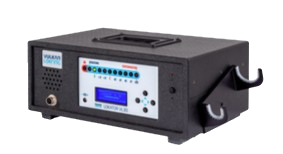
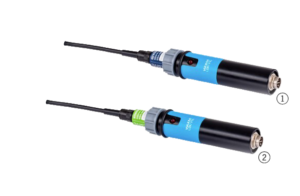
The VL30 is a superior choice for production applications where the leak rate is 0.0.5 oz/yr of refrigerant equivalent (one ounce in 20 years).
Applications such as refrigerators, refrigeration systems and ice machines. The VL30 can be calibrated with a reference leak and provides a quantitative display,
Hydrogen Sniffing Leak Detector
for HVAC & Refrigeration Manufacturing
Production-Line Calibratable Leak Detection
for High-Reliability Manufacturing
Hydrogen sniffing tracer gas leak detection is a highly sensitive and production-proven method for detecting leaks in HVAC and refrigeration manufacturing. For manufacturers requiring traceable, repeatable, and auditable leak testing, hydrogen leak detectors that can be calibrated directly on the production line provide critical quality assurance and process control.
By combining a hydrogen/nitrogen tracer gas mixture with hydrogen sniffing capability, manufacturers can ensure consistent leak detection performance across shifts, operators, and production cells. The VL30 unit can be calibrated with NIST leak.
The VL 30 is a fully quantitative leak detector showing the leak rate detected. The VL30 can be calibrated in the field using a NIST traceable calibrated leak and calibration routine.
Sensitivity (refrigerant probe):
0.5 g/yr for R290, HFC, HFO
and 0.05 g/yr for R600a


Sensitivity (hydrogen probe):
3x10⁻⁶ cc/s or 0.3 g/yr R134a equivalent


Hydrogen Leak Detection
Sniffing Using 5% Hydrogen/95% Nitrogen Tracer
Using hydrogen/nitrogen as a tracer gas provides a significant cost advantage to helium sniffing, while offering a 1000x increase in leak detection sensitivity over bubble testing methods. The TLD.1000, VL20 & Vl30 Hydrogen Leak Detectors provide a quantitative leak rate display in ppm with leak rate sensitivity to as low as 1 ppm. The TLD.500 & Hydro-Lok Hydrogen Leak Detector is a cost effective option perfect for when leak location is the most important feature in either above ground or sub-surface leak locations.
Hydrogen vs. Helium Leak Detection
Helium sniffing was the preferred method of tracer gas leak detection for many years. However, increased equipment cost and helium availability has limited the applications in which tracer gas could be used. As a result, users have had to employ less sensitive technology methods. Helium leak detectors can be either mass spectrometer or thermal conductivity technology. In comparison to hydrogen tracer mixture, helium mass spectrometers are 20x more costly than hydrogen, while helium thermal conductivity suffers from decreased sensitivity and more frequent service. Also, both helium methods pull a gas sample into the probe which can cause clogging of the probe. Our hydrogen leak detectors avoid this issue by being "impact" detectors, meaning no gas is drawn into the detector.
Hydrogen vs. Bubble Testing
Bubble testing is the accepted low cost method of finding leaks. Using soap and water solutions, bubbles are formed at the leak location. An alternative method is to submerge the test article in water and look for bubbles. However, these methods are subject to lower sensitivity. Using a hydrogen mixture tracer gas provides at least a 1000x increase in sensitivity. Furthermore, leaks that do not produce a bubble can be detected with either the TLD.500 or TLD.1000 Hydrogen Leak Detectors in service type applications while for product production, the VL20 Hydrogen Leak Detector or VL30 Hydrogen Leak Detector are the better choices.
Hydrogen Leak Detection Applications:
Leak Checking Applications in Manufacturing
- HVAC Systems
- Refrigerators
- Refrigeration Valves
- Heat Transfer Systems
- Vacuum Vessels
- Supermarket Cold Displays
- Inflatables
- Other Pressurized Systems
Service Type Applications
- Underground Water Lines
- Underground Transmission Lines
- Above and Underground Gas Lines
- Gas Storage Tanks
- Refrigeration Systems in Retail and Supermarkets
- Swimming Pools and Pool Piping
For more info on common applications for hydrogen leak detection.
Product Questions
Q. What is the difference in the VL20 & VL30?
A. Both the VL20 & VL30 are excellent in leak testing a sealed product. The VL30 is slightly more sensitive to smaller leaks thus is the choice for applications like home and commercial refrigerators where the life of the product can be 20+ years. The VL20 is the economical choice of leak detectors and can detect both hydrogen and refrigerant with the same sniffer probe.
Q. What size leak can the TLD.500 and the TLD.1000 find?
A. The TLD.1000 shows a quantifiable H2 leak rate and can detect into the single digit ppm values. The TLD.500, while not displaying a quantity of H2, can detect a leak concentration in the 25-35 ppm range. The detection limit is actually smaller but the user cannot always distinguish that low of a signal as a leak.
Frequently Asked Questions
Q. Isn’t hydrogen dangerous and explosive?
A. In 100% concentration, that is the case. We always recommend using 5% hydrogen mixed with 95% nitrogen because hydrogen is not combustible in nitrogen until hydrogen represents 5.7% . This mixture is green label non-combustible, therefore it will never have the ability to combust or increase the intensity of a fire.
Q. Will the hydrogen in the mixture settle out and cause an unsafe condition?
A. No, it remains mixed at all times. Inert gases cannot stratify. If they did the gas that makes up our atmosphere would stratify into pockets of disparate gases resulting in all of our deaths.
Q. Which is better as a tracer gas, hydrogen or helium?
A. In the past, helium was the best tracer gas because of its availability, the reliability of equipment to detect it, and its low background amount in air (0.5 ppm). Using hydrogen mixture as a tracer gas has become more popular because instruments like the TLD.500 and TLD.1000 have drastically improved in being able to find small leaks. Also, helium is in short supply and expensive. Another benefit is that hydrogen also has a low background in air (0.05 ppm).
Q. What is the cost of the 5% hydrogen, 95% nitrogen tracer gas compared to helium?
A. 5%H2/95% N2 is 15-25% the cost of 100% helium. While there are efforts to lower the helium concentration to also lower the cost, that affects the sensitivity of the helium leak detector to find smaller leaks. Also, because the helium/nitrogen is now a mixed gas, there is a charge to mix it at the factory. Therefore, cost savings by lessening helium amounts in the mixture may not significantly reduce overall cost.
Q. Where have hydrogen leak detectors been used in the past?
A. Hydrogen leak detectors were used extensively in locating leaks during the telecom boom of the late 1990s. Since then, hydrogen leak detectors have improved, leading them to be used in applications where lower detection of leak rates is required. In the future hydrogen leak detectors will be used for detecting and locating leaks in underground water lines or pipes. Water has increasingly become a strategic resource and leak detection is getting more important. Our TLD.500 starts in price at $998, allowing more plumbers and leak detection companies to be able to employ tracer gas leak detection into their portfolio of capabilities.
TLD.500 Leak Rate Capability
TLD.1000 Leak Rate Capability
Demonstrating the TLD.500
TLD.500 Finding Small Leaks
VL30 Hydrogen Leak Detector Response Time
TLD.500 Hydrogen Leak Detector